 comparison
Is a Maintenance-Only Service Right for Your Rental?
Last Updated: October 30, 2026
Quick Summary
A maintenance only service is right for a rental owner whose main burden is repairs, not tenant issues. It handles repair requests, scheduling, and contractor coordination, while the owner keeps marketing, screening, rent collection, and leasing. It makes most sense for owners who already manage tenants themselves.
- Routine work commonly covers HVAC servicing, gutter cleaning, appliance repairs, and plumbing and electrical fixes.
- Full management covers tenant screening, rent collection, and lease drafting, which maintenance-only service leaves with the owner.
- Hampton Roads landlords handle roughly 3.3 maintenance requests per rental unit a year, according to Hemlane.
- Set an emergency spending limit in writing so technicians can act without waiting for approval.
- Ask for the full fee schedule in writing and watch for contractor markups, after-hours fees, and trip charges.
Table of Contents
- What a Rental Property Maintenance Only Service Covers
- Property Management vs. Property Maintenance: Where the Line Falls
- Routine vs. Emergency Rental Maintenance and Who Handles Each
- Rental Property Maintenance Costs and How Fee Structures Work
- Scope, Exclusions, and Contract Terms to Check
- Rental Property Maintenance Checklist for Owners
- Choosing a Maintenance Partner: Questions to Ask Before You Sign
- Frequently Asked Questions
Is a maintenance-only service right for your rental? For many owners, the honest answer is "only if the work is the problem." A maintenance only service handles the repairs and leaves the rest of the landlord's job with you. Hampton Roads landlords are handling roughly 3.3 maintenance requests per rental unit a year, and that volume is still climbing, according to Hemlane's Rental Property Maintenance, by the Numbers report. That is a lot of phone calls, scheduling, and invoices for an owner who only wanted the place to stay rented. First Providence Realty built a maintenance-only option for exactly that situation, and this guide explains how it works, where it fits, and what to check before you sign anything.
What a Rental Property Maintenance Only Service Covers
A maintenance-only service handles the physical upkeep of a rental: responding to repair requests, scheduling contractors, and coordinating the work. It does not handle the rest of the landlord's job. Marketing the unit, screening tenants, collecting rent, and managing leases stay with the owner. Owners who choose to retain these administrative duties should still establish a proactive approach to vacation rental maintenance to preserve the long-term value of their investment.
Routine work commonly includes HVAC servicing, gutter cleaning, appliance repairs, and plumbing and electrical fixes. Emergency calls can be part of the arrangement, but response terms vary by provider. Confirm exactly which categories are included before you compare prices.
Property Management vs. Property Maintenance: Where the Line Falls
Full property management and property maintenance overlap, but they are not the same job. A full-service manager takes on the whole relationship with the tenant. You can compare these options on our comprehensive property management maintenance services page. A maintenance partner takes on the physical property and nothing else. The practical line is simple: if you want someone to answer tenant calls, approve leases, and move money, you need management. If you already handle tenants yourself and just want repairs done correctly and quickly, a maintenance-only arrangement may be enough.
The distinction matters most when you compare what each service actually does. Use this feature-by-feature breakdown as a starting point, then confirm each line against a provider's written scope.
| Function | Maintenance-only service | Full-service property management |
|---|---|---|
| Tenant screening and leasing | Owner | Manager |
| Rent collection and ledger | Owner | Manager |
| Lease drafting and renewals | Owner | Manager |
| Tenant communication and complaints | Owner (or shared) | Manager |
| Routine and preventive repairs | Provider | Provider |
| Emergency repair response | Provider | Provider |
| Contractor sourcing and scheduling | Provider | Provider |
| Property inspections | Usually add-on or limited | Typically included |
| Move-in and move-out condition reports | Owner or add-on | Manager |
| Eviction coordination | Owner | Manager |
| Owner statements and reporting | Repair records only | Full financial reporting |
| Typical fee basis | Per job, flat fee, or monthly retainer | Percentage of collected rent |
Two areas deserve extra attention. First, tenant communication: clarify who answers tenant calls and for what. Second, inspections: confirm whether seasonal walkthroughs and move-in and move-out condition reports are included in any plan you consider.
Some owners start with maintenance-only service and later add leasing or rent collection as their portfolio grows. Ask any provider whether their agreement can scale up without a new contract, and whether the maintenance-only rate changes if you add services.
Many owners find a maintenance-only option fits them better once they realize how much of their time goes to repairs rather than tenant issues. Track your own hours for a month before you decide, the answer is usually clearer than it feels.
Routine vs. Emergency Rental Maintenance and Who Handles Each
Routine maintenance is planned work: filter changes, seasonal inspections, and preventive servicing. Owners who live out of state can learn about our annual rental inspections for catching these issues early. It is predictable, and it is the cheapest form of upkeep because problems get caught early.
Emergency maintenance is unplanned and urgent: water leaks, no heat in winter, a failed refrigerator. Response speed matters most here, and so does clear authorization. Set a spending limit in advance so a technician can act without waiting for an approval email at 2 a.m. A good maintenance partner separates the two categories and tells you which is which on every invoice.
Rental Property Maintenance Costs and How Fee Structures Work
Maintenance costs add up quickly. Maintenance costs add up over time. Budget accordingly, but treat any national average as a planning figure, not a quote, your actual cost depends on the property's age, systems, and local labor rates.
Fee structures differ across providers, and the model matters as much as the rate. The four common models are:
- Per-job pricing. You pay for each repair, often at a published hourly rate plus materials. Simple to understand, but costs spike in a bad year.
- Flat monthly retainer. A fixed fee for access to a maintenance team and a set number of visits or hours. Predictable, but check what happens when you exceed the allowance.
- Percentage of rent. More common in full-service management, but some maintenance-only providers use it. It scales with rent rather than with work performed.
- Hybrid. A smaller monthly fee plus per-job charges, sometimes with a discount on labor.
Whichever model you choose, ask for every charge in writing. Line items that often surprise owners include:
- Contractor markups. Providers may add a percentage to subcontractor invoices. Ask for the markup rate and whether it applies to materials as well as labor.
- Emergency and after-hours fees. A midnight call usually carries a premium. Confirm the rate and the hours it applies to.
- Trip or dispatch charges. Some providers bill for the visit even when no repair is performed.
- Materials handling. Markups on parts can exceed markups on labor.
- Administrative or onboarding fees. Setup, account, or technology fees sometimes appear only on the first invoice.
To compare quotes fairly, normalize them. Ask each provider for the estimated cost of the same three scenarios: a routine HVAC service, an after-hours water leak, and a mid-size appliance replacement. The spread between quotes on identical scenarios tells you more than any headline rate.
Finally, separate maintenance cost from capital cost. A $1,600 annual maintenance figure does not include a roof replacement or a full HVAC system swap. Ask your provider how they flag items that cross from repair into capital improvement, and who approves that spending. A clear approval threshold, for example, anything above a set dollar amount requires your sign-off, keeps both budgets under control.
Scope, Exclusions, and Contract Terms to Check
The contract matters more than the sales pitch. Look for these points before you sign:
- Scope: Which repair categories are covered, and which are excluded?
- Response times: What is the commitment for routine and emergency requests?
- Approval limits: At what dollar amount does the provider need your sign-off?
- Termination: How much notice is required, and are there penalties?
- Documentation: Will you receive invoices, photos, and work records?
Also clarify who decides what counts as normal wear and tear and who pays for it. Disputes over that line are common, and a clear contract prevents them. Our article on what counts as normal wear and tear explains where that line usually falls.
Rental Property Maintenance Checklist for Owners
Before you hire any maintenance partner, walk through the property with this list:
- Document current condition with dated photos
- Test HVAC, water heater, and major appliances
- Check gutters, downspouts, and roof access points
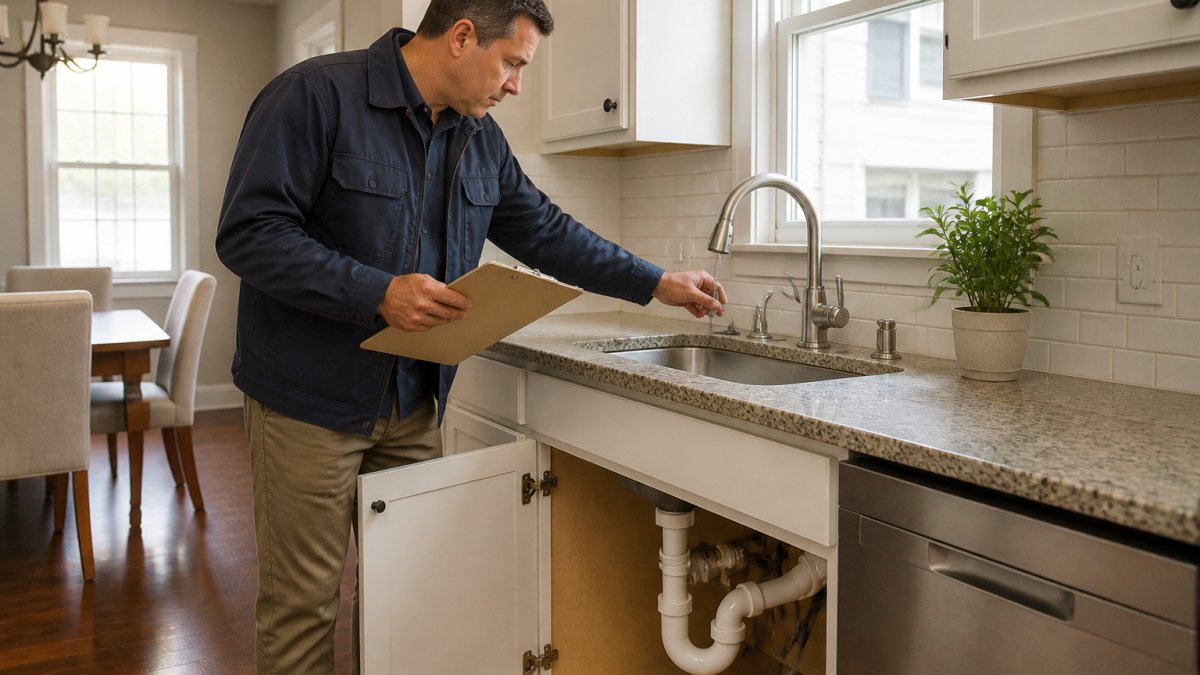
- Inspect plumbing under sinks and around toilets for slow leaks
- Verify smoke and carbon monoxide detectors work
- Set an emergency spending limit in writing
- Agree on how tenants should report problems
A baseline record makes it far easier to tell later whether damage happened during a tenancy or was already there.
Choosing a Maintenance Partner: Questions to Ask Before You Sign
Use these steps to compare providers fairly:
- List your needs. Write down the repair types you handle most often.
- Ask for the full fee schedule. Get every charge in writing before comparing.
- Confirm response times. Ask for specific commitments for emergencies.
- Check contractor vetting. Ask how technicians are licensed and insured.
- Request a sample invoice. Review how work is documented.
- Read the termination clause. Know your exit before you enter.
Ask other providers the same questions. Consistent answers make comparison easy. First Providence Realty offers a Comprehensive Maintenance Partner Program that eliminates monthly management fees. Get in touch with us today to talk through your property's needs.
Frequently Asked Questions
Can I hire a company to handle maintenance only for my rental property?
Yes. Some providers offer maintenance-only service, where they handle repair requests, scheduled upkeep, and vendor coordination without taking on tenant screening, rent collection, or lease management. Ask each provider to put the scope in writing, including which calls are covered, whether emergency response is included, and how work orders are approved. Pricing varies by provider and by the work involved, so request a current quote and check the provider's website for any published rates before comparing options.
What is the difference between property management and property maintenance?
Property management covers the full landlord role: marketing vacancies, screening tenants, collecting rent, handling lease enforcement, and often managing evictions. Property maintenance focuses on the physical condition of the home, including repairs, preventive service, inspections, and vendor coordination. Some owners hire a full-service manager, while others keep leasing in-house and use a maintenance-only provider for the repair work. The right split depends on how much of the landlord role you want to keep.
How do routine and emergency rental repairs differ?
Routine repairs are planned or non-urgent, such as replacing a worn appliance, servicing an HVAC system, or fixing a slow drain. Emergency repairs need fast response because they threaten safety, the habitability of the home, or further damage, such as a burst pipe, a gas smell, or a failed heating system in winter. Maintenance agreements often set different response windows for each category, so confirm after-hours coverage and how emergency calls are billed before you sign.
How should a landlord choose a property maintenance company?
Start by confirming the provider's licensing and insurance for the trades it uses, and ask whether it employs technicians or subcontracts the work. Request a written scope of services, a clear fee schedule, and the process for approving repairs above a set dollar amount. Check how the company documents work orders and communicates with tenants, and ask for references from owners with similar properties. Comparing at least three providers on these points gives you a practical basis for the decision.